

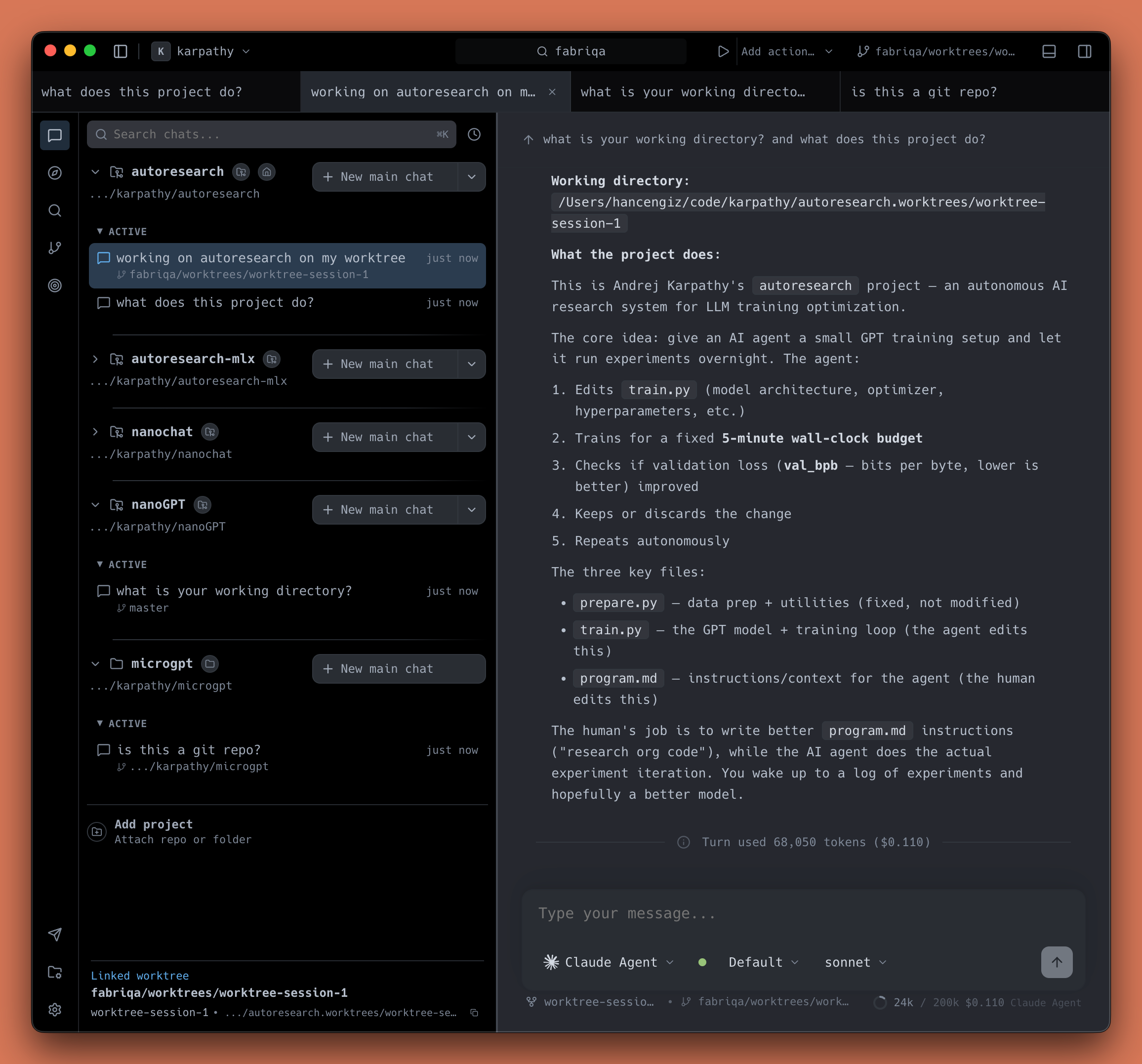
The AI coding tools spectrum itself is actually a good way of working. Each tool brings its own strengths for different contexts, and using multiple tools across a project is natural. The problem is what happens in between. I was working on a spec-driven development project recently and found myself reaching for Codex when I wanted autonomous execution against my specifications. Codex is genuinely good at following structured specs and running through implementation tasks without hand-holding. But when the implementation introduced an edge case bug, I tried troubleshooting with Codex multiple times and it could not find the issue it had created. The bug was subtle enough that the same model that wrote the code kept missing it on review.
So I switched to Claude Code CLI. But I needed to give it the full context of what had been built, what the specs were, and where things had gone wrong. I actually asked Codex to write me a handover prompt first, a summary of the current state, the implementation decisions, and the specific failure. I copied that prompt into Claude Code, and as I expected, it identified the edge case almost immediately. That entire workflow, using one tool’s strength to compensate for another’s blind spot, with a manual copy-paste handover in between, is something I do constantly. It works, but it is held together with clipboard and memory.
That is the problem fabriqa solves. fabriqa is not another editor. It is an AI Development Orchestration Layer: a coordinated, spec-driven workspace for the tools you already use.
Why You Should Use It
There are three big reasons to use fabriqa.
First, the unified worktree experience is already useful today. If you are already paying for tools like Claude Code, Codex, Cursor, OpenCode, Gemini CLI, or Kiro CLI, fabriqa gives them one shared place to work. You can switch tools without losing the thread, keep the same project history visible, inspect diffs and git changes in one place, and avoid the usual copy-paste handoff mess. The broader ACP lineup already works too:
Amp
Auggie CLI
Autohand Code
Claude Agent
Cline
Codebuddy Code
Corust Agent
crow-cli
DimCode
Factory Droid
GitHub Copilot
goose
Junie
Kilo
Kimi CLI
Minion Code
Mistral Vibe
pi ACP
Qoder CLI
Qwen Code
Stakpak
fabriqa fetches the ACP registry and hot-swaps new entries into the catalog, so this list keeps growing without me having to ship a release every time a new tool shows up.
Second, specs are the real point. That is the part I care about most, and it is the reason I think fabriqa can become much more than a tool switcher. The specs module is coming in April 2026, in a couple of weeks. That is what I am focused on getting right now. I believe spec-driven development is a fundamental skill everyone needs to learn if they want agents to work like real teammates instead of glorified autocomplete. If you cannot define the work clearly, you cannot expect autonomous agents to execute it well.
Third, multi-agent orchestration is where this goes next. That part is phased right now. Today, worktrees plus manual prompts already let you do a practical version of multi-agent work inside fabriqa. But that is not the final goal. The real goal is: define specs, define dependencies and execution order, then fire up multi-agent profiles that can run those tasks fully autonomously. I want that layer to sit on top of a best-in-class specs system, not on top of vague prompts. That is why I am pushing specs first and the deeper orchestration layer after that.
fabriqa is in alpha, and it is free right now. When I start charging, it will be a small platform fee. I am not going to charge for tokens or meter your LLM usage. The model side is BYOK, bring your own keys. The agent side is BYOS, bring your own subscriptions. Native LLM integrations through API keys are already there, but they are still limited. The full agentic loop on that side is not fully where I want it yet.
It runs as a desktop application on macOS, Windows, and Linux. I initially started by maintaining a CLI TUI and the desktop app together, but for now I have stopped trying to keep the TUI at parity with desktop. That is intentional. I think the popularity of CLIs is decreasing, so the desktop experience is the primary focus. If there is real demand, I will continue investing in the TUI more seriously.
A session in fabriqa is not just a chat thread. It is a full execution context backed by a database that tracks what actually happened.
What Is Coming
This alpha focuses on the foundation: coordinated execution across the tools you already pay for, plus a user experience that feels like a real application, not a weekend side project. Since releasing fabriqa on March 3, 2026, I have been using it as my main daily driver. Until mid-February 2026 I was using Claude Code more heavily. Around the GPT-5.3 release, Codex became my main subscription inside fabriqa. I still keep a Claude Code subscription and use it where I find it better, especially for more interactive troubleshooting sessions and a lot of UI design work, but not only that.
But the main unique value proposition of fabriqa is not just putting existing tools into one window. It is spec-driven execution. That layer is under active development now and is planned for release in April 2026. I am already testing these workflows myself with a limited number of early testers. If you want to get into the specs testing group and do not want to wait another month, reach out.
After that, multi-agent orchestration builds on top of those specs. The goal is not random agent swarms. The goal is coordinated execution against explicit intent, structured artifacts, and clear workflow state, with git worktree isolation and conflict detection where that makes sense.
The Details That Matter
Global hotkeys bring fabriqa to the front and send it to the background instantly. In the chat view, pressing the right and left arrow keys acts as page up and page down. Command-up takes you to the top of the conversation. There is a strict sticky scroll behavior that always keeps your last message to the AI visible at the top of the viewport. If you are a multitasker like I am and you switch back to a fabriqa chat after working on something else, you do not have to wonder what you were doing. Your last message is right there, and you immediately have context on where you left off. When you scroll up, your previous message stays anchored and visible.
There is light mode, dark mode, and a bunch of themes. Git changes are visible directly in the interface. If you are curious about how I implemented ACP, I actually kept the ACP debug logs that I used during development open as a feature. You can open the ACP debug panel and see the raw protocol messages going back and forth between fabriqa and the agents. The settings page, the command palette, and the keyboard shortcuts have a bunch of things in them that are not common in tools like this yet. I am prioritizing features over documentation right now, so some of these are things you discover by exploring the application itself.
Where This Is Going
I have been writing about spec-driven development and the Explore-Specify-Engineer workflow for a while. fabriqa is where those ideas become tooling. Mark my word: if you are not working with specs yet, you are missing where this is going. Making specs a first-class part of how you build should be a top priority.
The specs-driven system in fabriqa is being built to be generic, not hardcoded to one opinionated flow. It will include my own specs.md FIRE flow, AWS AI-DLC flows as implemented in specs.md, and commonly used patterns like BMAD-METHOD as built-in fabriqa workflows. I am also working on a meta-workflow for fabriqa itself, where you can talk to fabriqa agents to design your own workflows around your own needs, with those agents being aware of fabriqa’s workflow DSL instead of treating workflows like raw text.
The release planned for May 2026 adds a marketplace so fabriqa users can share their own workflows with each other. That matters because the long-term goal is not just to ship my workflows. It is to make fabriqa a system where good workflows can be created, evolved, reused, and shared.
fabriqa is also architected in a way that lets me run it as a hosted web application later. I plan to offer that as fabriqa.cloud with the exact same core experience. That is possible because the frontend is React-based and the server-side architecture is cleanly separated, more like Slack than like a one-off desktop app. The hosted version will run in cloud sandboxes, but that is not the only future I care about.
I also want a mobile app that can connect to your fabriqa instance on fabriqa.cloud, on your own machine, or on your own premises. I am planning around private-network approaches like Tailscale so fabriqa.cloud does not have to be mandatory for mobile. I want fabriqa to be something you can keep building with while you are on the go, not something that traps you into one deployment model.
What You Get Today
If you use fabriqa today, you get a real desktop workspace for coordinating the AI coding tools you already pay for.
One place to switch between tools like Claude Code, Codex, Gemini CLI, OpenCode, Cursor, and more without losing context
A unified worktree and git-aware workflow where chats, diffs, progress, and handoffs live together
A practical path to multi-agent execution today through worktrees and manual prompt coordination, with the specs layer landing in April
Access to the ACP ecosystem without vendor lock-in, plus occasional free-model opportunities that come through platforms like OpenCode and Kilo
The desktop builds are available at fabriqa.ai. Go download fabriqa for free and start using it with your own subscriptions like Claude Code and Codex. You can also benefit from free model offers that show up through platforms like OpenCode and Kilo. For example, OpenCode is currently hosting Xiaomi MiMo-V2-Pro free for OpenCode users for a limited time, and those kinds of campaign models are useful inside fabriqa too.
fabriqa itself is free during the alpha. I am not asking anyone to sign up right now. Just download fabriqa and start using it. Later, when I have user accounts or email capture in place, the people who helped me make fabriqa better during this alpha will get free fabriqa access and should not need to pay that small platform fee. I have not really settled the pricing model yet, and I want to be honest about that. My instinct is that it should cost less than a Starbucks coffee, not something meaningful compared to what you already spend on the tools around it. My main goal right now is to get fabriqa into the hands of agentic AI developers and teams so they can help me make fabriqa the best AI Development Orchestration Layer for software development in the world. If you want early access to the specs workflows, reach out. fabriqa is still early, but amazing things are in plan. It will be nothing like what already exists.